ASSEMBLE LINE AUTOMATION
Assembly line automation refers to the integration of advanced machinery, robotics, and intelligent control systems to streamline the manufacturing and assembly process. It is designed to enhance productivity, ensure consistent quality, and reduce operational costs across various industries such as automotive, electronics, appliances, heavy engineering, and industrial equipment.
Automated assembly lines typically include robotic handling systems, conveyors, precision tooling, screw driving units, welding stations, inspection systems, and packaging modules. These systems work in synchronization through PLC, HMI, and SCADA controls to ensure smooth material flow, accurate component placement, and repeatable assembly operations.
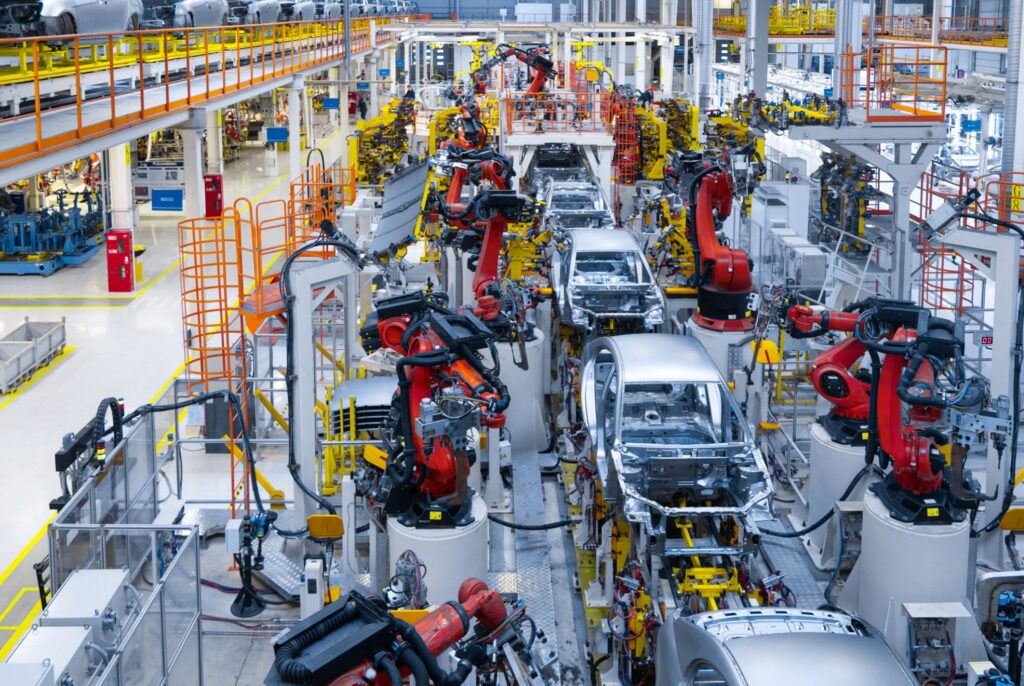
Key features often include :
- Automated Material Handling: Conveyors, transfer systems, and robotic pick-and-place units for efficient product movement.
- Robotic Assembly Operations: High-precision tasks such as fastening, welding, sealing, and component fitting.
- In-line Inspection & Testing: Vision systems, functional testing, leak testing, and quality checks integrated within the process.
- Data Monitoring & Traceability: Real-time production tracking, barcode/QR integration, and centralized data management.
- Safety Systems: Light curtains, safety interlocks, guarding, and emergency stop mechanisms to ensure operator safety.